 The Tsirk [bird symbol of the Finno-Ugric Capitals of Culture program, currently residing in Hancock] took flight across Michigan, Wisconsin, and Minnesota to visit FinnFest, the annual Finnish-American festival which has been active for 43 years.
The four day festival hosted Finnish-Americans and “Finnterested” people from around the nation. This year FinnFest was hosted at the Hilton Hotel in Minneapolis, but previous years have included cities such as Hancock, Tampere, Livonia, Toronto, Duluth, and Seattle.
Attendees of FinnFest 2026 were presented with a variety of seminars, classes, musical performances, and local history tours to attend. Some of this year’s musicians included Performer of the Year, Ruut DeMeo, Finnish rapper Paleface, Ida Metsberg, Kyle Gray Young, Eeppi Ursin, one-man-band Steve Solkela, and kantele player Sheila Coughlin.
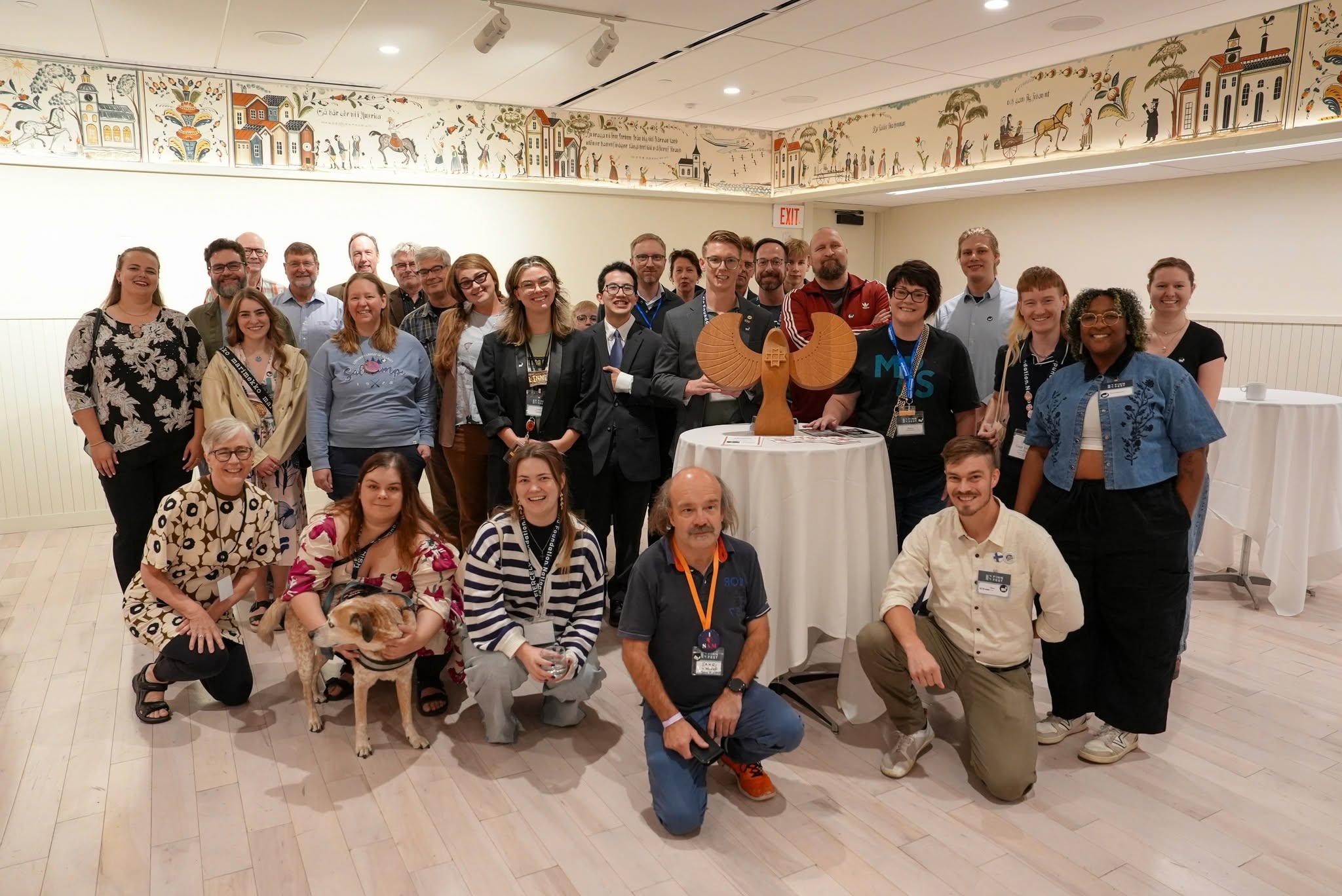
During the festivities, the Tsirk rested at the heart of the festival, the tori, where various Finnish businesses, organizations, and resources could be found. Visitors could find the Tsirk at the Finlandia Foundation National table, along with educational materials about the meaning of the Tsirk, Kindred People’s Day, and Finno-Ugric peoples.
The theme of this year’s FinnFest was “hidden in plain sight,” meant to bring to light the often unseen Finnish influence just beneath the surface of local American history and everyday life. It seemed only fitting that this FinnFest coincided with the Finno-Ugric Capital of Culture year in Hancock, Michigan, as the Finno-Ugric roots of FinnFest and its attendees were also “hidden in plain sight.”
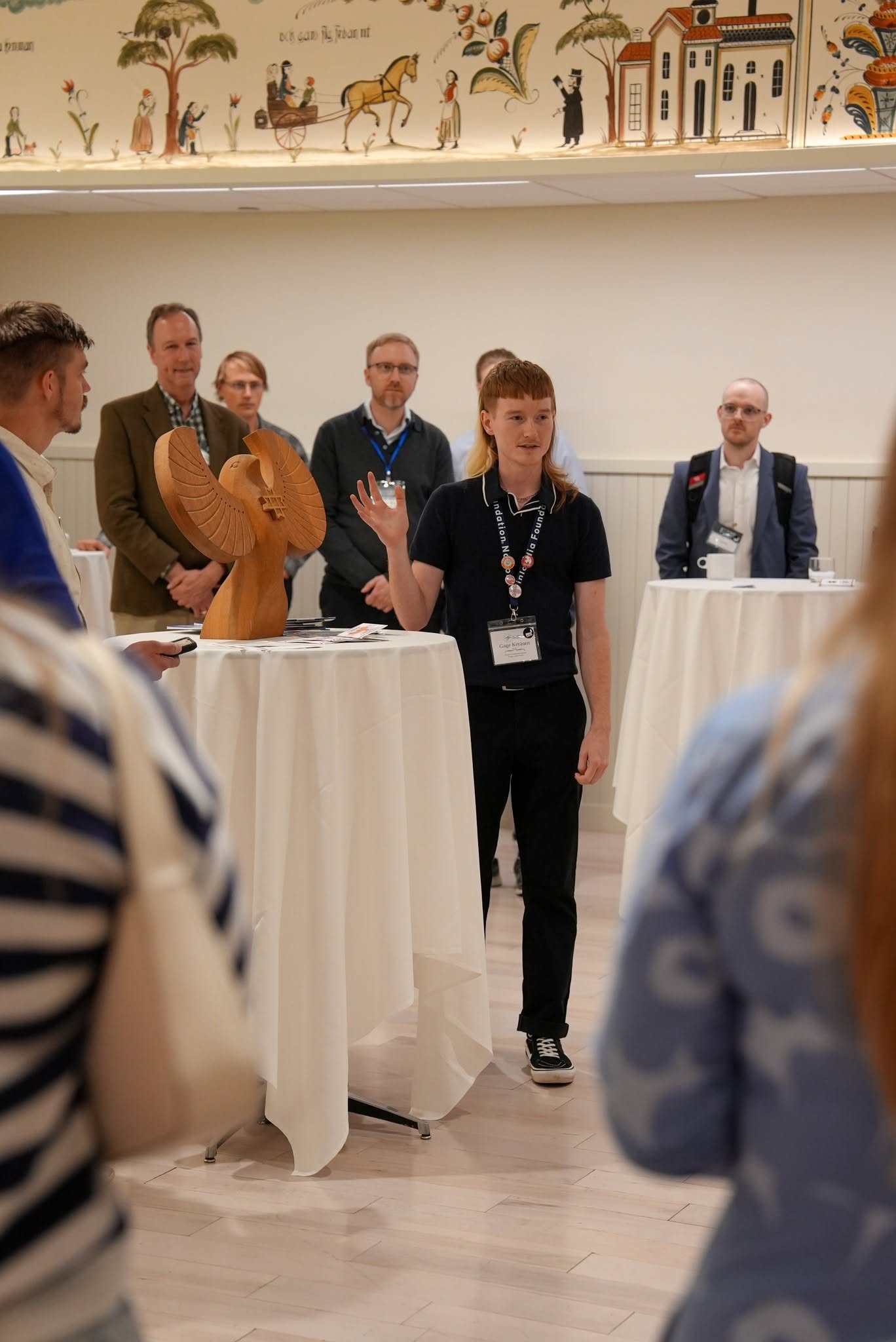
On Saturday, festivalgoers filled the hall to attend a presentation of the Finno-Ugric World Tour by Gage “Touko” Keränen and stayed afterwards to take photos with the Tsirk or to collect zines (miniature books) about various Finno-Ugric topics. Many were inspired by the presentation to share their family stories of immigration to the US from Ingria, Finnmark, Sápmi, and Karelia.
The weekend also featured the debut of the play Morton: The Forgotten Founder, a show about the American founding father John Morton, whose roots lie amongst the Forest Finns of Norway and Sweden. The show was hosted at Minnehaha Park in Minneapolis and staged in the tradition of Finland’s kesäteatteri (summer outdoor theatre).
A community dance evening followed the play, hosted by Twin Cities’ folk ensemble Lauluaika, performing traditional Finn hall music and dance tunes that have animated Finnish-American communities for generations.
The final day of FinnFest brought festivities to the American Swedish Institute (ASI). Kantele workshops, Finnish language lessons, musical performances, seminars, and a sauna towel embroidery class were among the activities available on Sunday.
The Tsirk made a final appearance at ASI for the Finlandia Foundation’s Young Leaders networking event. As it was September 20th, the Day of Remembrance for Dead Languages (Kuolleiden Kielten Muistopäivä) was observed, in honor of Klavdija Plotnikova, the last speaker of the Kamass language, and Albert Razin, an Udmurt language activist. Young Leaders Board members Nate Kilponen-Fix and Gage “Touko” Keränen spoke to the group about the meaning of the day and the reality that many endangered Finno-Ugric languages face today.
Even beyond the events of FinnFest, the Tsirk has continued to inspire conversations and connections amongst the Finno-Ugric diaspora and “Finnterested” people. We hope that these conversations can continue long after the end of the Capital of Culture year in Hancock.
Author: Gage “Touko” Keränen